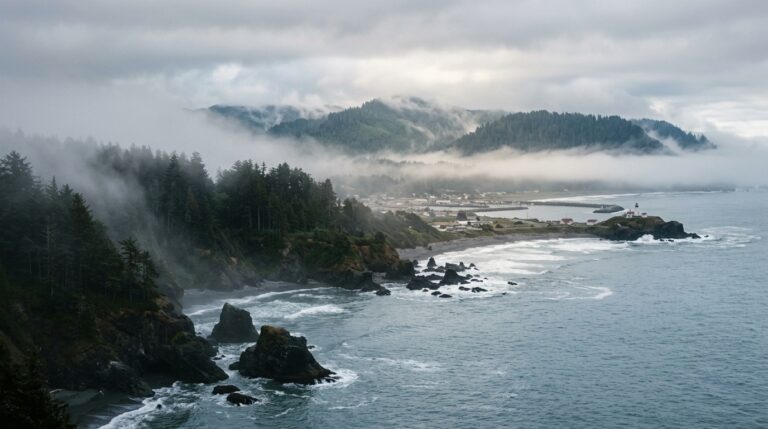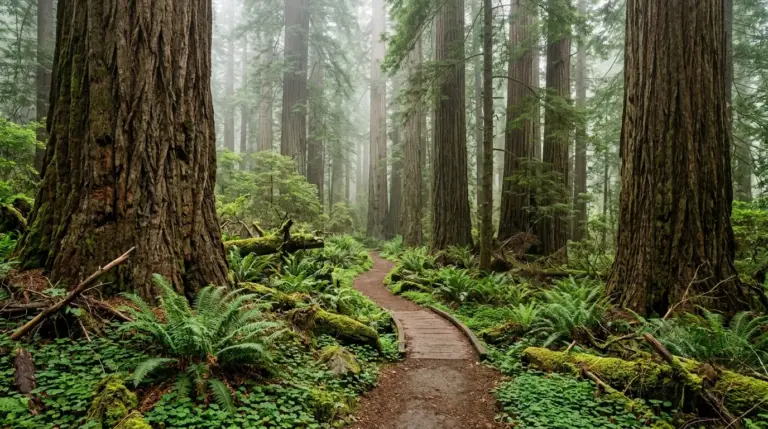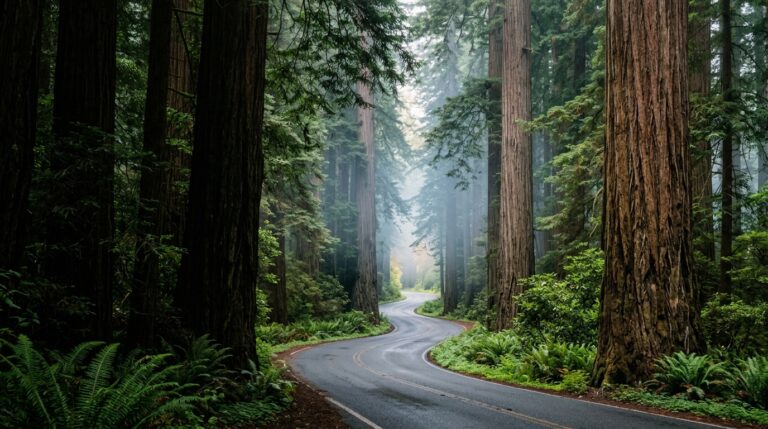
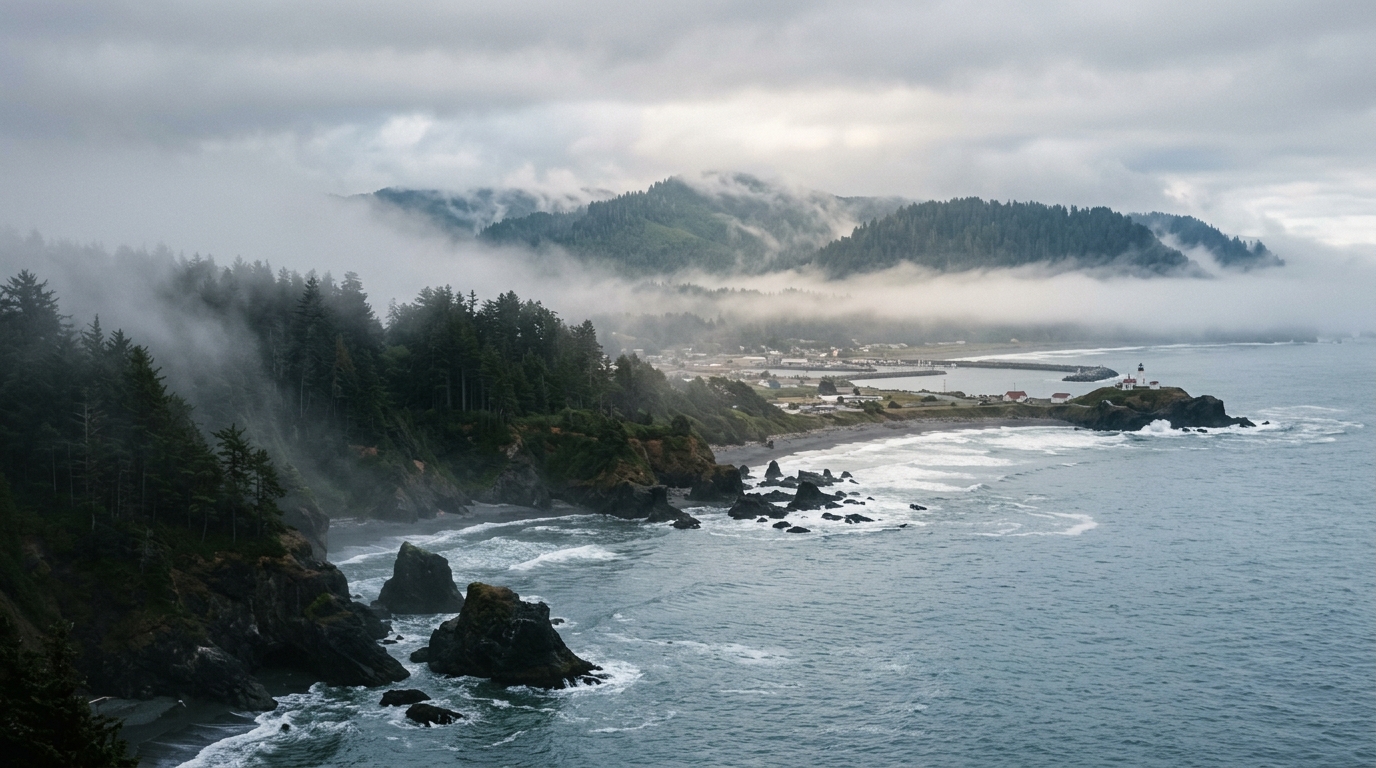
A summer trip to Crescent City may not look like the California vacation shown in a typical beach advertisement. Mornings can begin beneath low gray clouds, mist may hide part of the coastline, and a cool wind can make the Pacific shore feel much colder than an inland redwood trail. These conditions are normal for California’s far northern coast and are part of what keeps the region green, atmospheric, and closely connected to its redwood forests.
Instead of waiting for a guaranteed clear day, plan around changing visibility and temperature. Check the National Weather Service forecast for Crescent City before leaving your accommodation, then keep one forest option and one coastal option available. Our Del Norte County travel guide can help you group nearby destinations without spending the whole day driving between weather zones.
Why Fog Is a Normal Part of a Crescent City Summer
Coastal fog forms when moist air interacts with the cool marine environment near the Pacific. The resulting marine layer can move inland as low clouds or fog, reducing visibility and keeping temperatures cooler near the coast. Conditions may change over a short distance. Crescent City can remain overcast while Hiouchi, Gasquet, or a Smith River location farther inland experiences brighter and warmer weather.
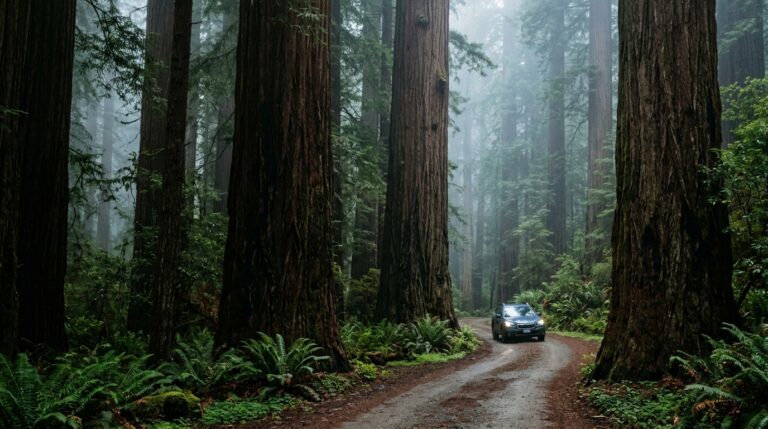
The fog is not simply an inconvenience. Moist summer air plays an important role in the redwood environment by reducing water loss and bringing moisture to forests during the region’s drier season. A foggy morning can also create some of the most distinctive experiences in Del Norte County, from mist drifting between enormous redwood trunks to layers of gray coastline appearing and disappearing above the Pacific.
How the Marine Layer Changes Through the Day
There is no reliable rule that Crescent City fog will disappear at a specific hour. On some days, low clouds may thin during the late morning or afternoon. On others, the coast can remain gray all day while inland areas become sunny. Wind can also move fog back across a viewpoint after visibility briefly improves.
Morning, Afternoon, and Inland Differences
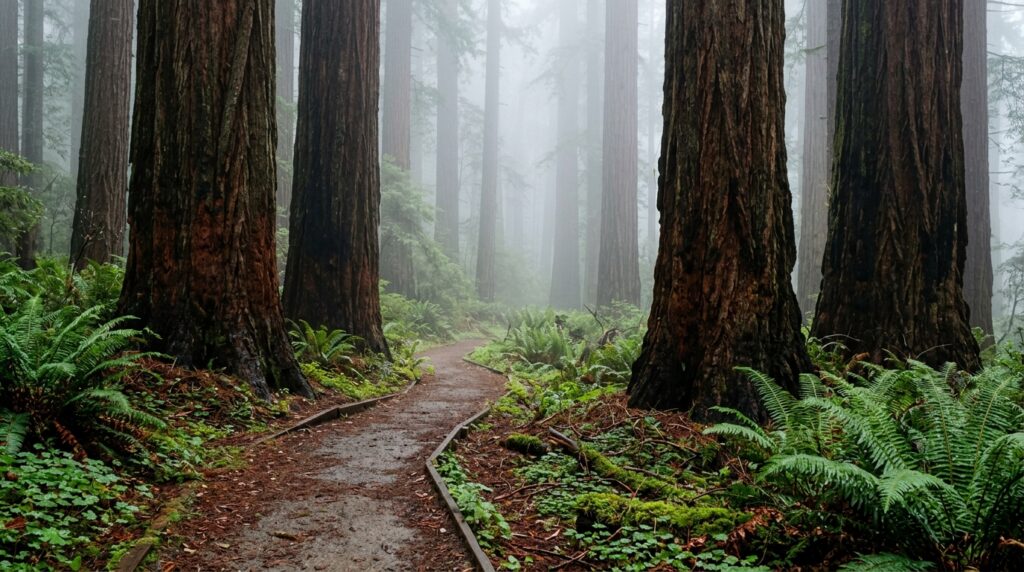
Morning is often an excellent time for forest walks. Diffused light reduces harsh contrast beneath the canopy and can create a calm atmosphere around places such as Stout Grove, Simpson-Reed Trail, or Howland Hill Road. Damp roots, wooden surfaces, and loose trail material may be slippery, so foggy conditions do not remove the need for careful footing.
Afternoon may offer improved coastal visibility, but it should be treated as an opportunity rather than a promise. Use a flexible coastal stop such as Crescent Beach Overlook, the Crescent City harbor area, or another legal viewpoint. If the view remains obscured, enjoy the immediate landscape instead of driving repeatedly between overlooks in search of a clear horizon.
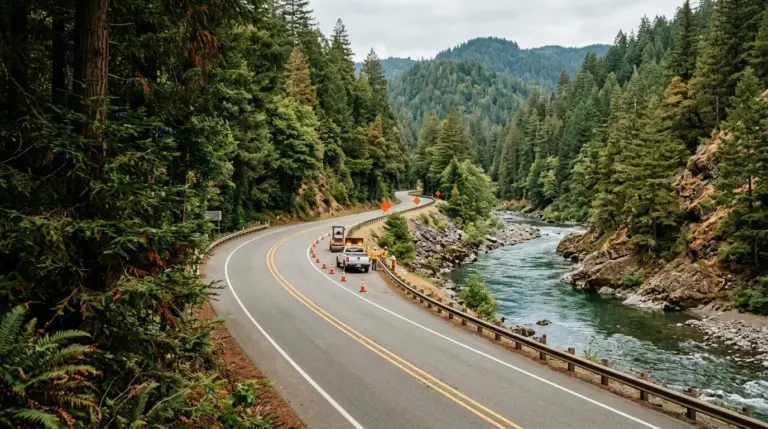
Travelers seeking warmer conditions can sometimes find them farther inland along U.S. 199 and the Smith River corridor. However, inland warmth should not be used as proof that the coast has cleared. Check both the current forecast and real-world conditions before returning to a tide-dependent beach or lighthouse visit.
Why Fog Supports the Redwood Landscape
Coast redwoods thrive in a mild, moist environment. Summer fog helps reduce moisture loss and supplies water during a season when rainfall is generally lower. Droplets collect on needles and branches before falling onto the forest floor, where they benefit plants and soil around the trees.
This relationship makes fog part of the destination rather than bad weather that must be avoided. Mist can reveal the scale of the forest by separating nearby trunks from those deeper in the grove. It can also soften sound and reduce visual distractions. Visitors who slow down often notice moss, ferns, redwood sorrel, bark texture, and forest layers that are easier to overlook under brighter conditions.
Review our Howland Hill Road and Stout Grove guide before driving into Jedediah Smith Redwoods, especially when visibility is reduced or the road surface is damp.
What to Pack for Cool, Damp, and Changing Conditions
The most common packing mistake is assuming that July or August automatically means shorts, sandals, and a light shirt. Crescent City summers are generally cool compared with inland California, and wind near the ocean can make the temperature feel lower. A visitor may need a jacket at a coastal overlook, remove it during a warmer Smith River stop, and put it back on beneath the redwood canopy.
Clothing, Footwear, and Photography Equipment
Dress in layers rather than relying on one heavy coat. Start with a breathable shirt, add a light fleece or sweater, and carry a wind-resistant outer layer. A lightweight rain shell is useful for mist, drizzle, and damp vegetation, even when significant rain is not forecast. Pack an extra pair of socks if the itinerary includes Fern Canyon, a wet trail, or a long day away from the accommodation.
Wear walking shoes or hiking boots with reliable traction. Smooth fashion shoes and basic flip-flops perform poorly on wet roots, loose gravel, mud, wooden steps, and rocky coastal surfaces. Keep a dry layer in the vehicle, but do not leave luggage, electronics, or valuables visible at trailheads.
For photography, carry a lens cloth and a small microfiber towel. Fine droplets can collect on the front element without being obvious until the photographs are reviewed later. A lens hood helps, while a simple protective cover can keep a camera dry during persistent mist. Avoid changing lenses in blowing fog or drizzle when possible.
Fog can simplify a composition, but automatic camera settings may make the scene darker than it looked. Check exposure rather than increasing saturation aggressively. Preserve the muted greens, brown bark, and blue-gray atmosphere that make the redwood coast distinctive. Never step off a developed trail, climb unstable rocks, or stand in the roadway to obtain a clearer photograph.
How to Plan a Flexible Fog-Season Itinerary
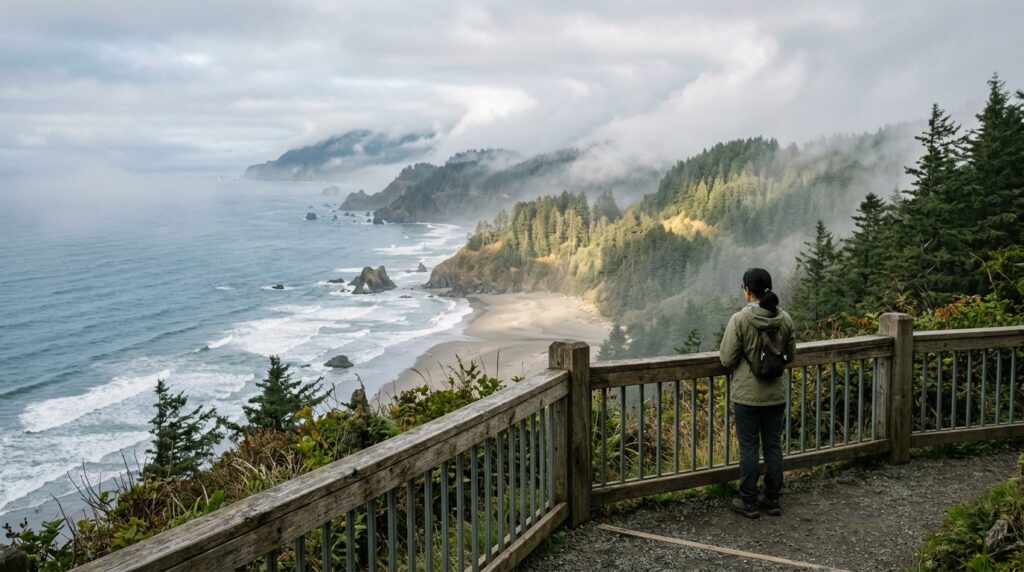
A successful fog-season plan does not depend on seeing every distant viewpoint clearly. Organize the day around nearby alternatives and choose activities that remain worthwhile under low clouds. The forest usually provides a more dependable morning experience, while the coast can remain an adjustable afternoon option.
A Practical Redwoods-and-Coast Day From Crescent City
Begin by checking weather, park conditions, and road advisories. If the coastal forecast shows morning fog, travel toward Jedediah Smith Redwoods and choose one primary grove. Stout Grove suits visitors seeking a shorter walk, while Boy Scout Tree Trail requires more time and preparation. Simpson-Reed offers another relatively accessible old-growth option near U.S. 199.
Do not attempt to complete every major trail before lunch. Parking areas are limited, narrow roads require slow driving, and fog can reduce visibility around curves. Our alternative redwood hikes near Crescent City can help you keep a second trail ready when the first parking area is full.
Morning Redwoods, Afternoon Coast, and Safety
After the forest, stop for lunch in Hiouchi or Crescent City and reassess the coast. If visibility improves, consider Crescent Beach Overlook, the harbor, or a signed beach access. Battery Point Lighthouse depends on tidal access as well as weather, so fog clearing does not automatically make the route available. Never cross rising water or rely on another group’s timing.
If the coastline remains hidden, use a close-range experience. Walk near the harbor, visit an open information center, explore a community stop, or photograph coastal vegetation and mist rather than forcing a distant ocean view. Our Crescent City visitor guide will provide additional town-based options as the website expands.
Fog reduces visibility, but it does not reduce ocean hazards. Northern California beaches have cold water, strong currents, rising tides, and sneaker waves that can travel much farther up the shore than previous waves. Stay away from driftwood near the waterline, keep children close, avoid climbing wet coastal rocks, and never turn your back on the ocean.
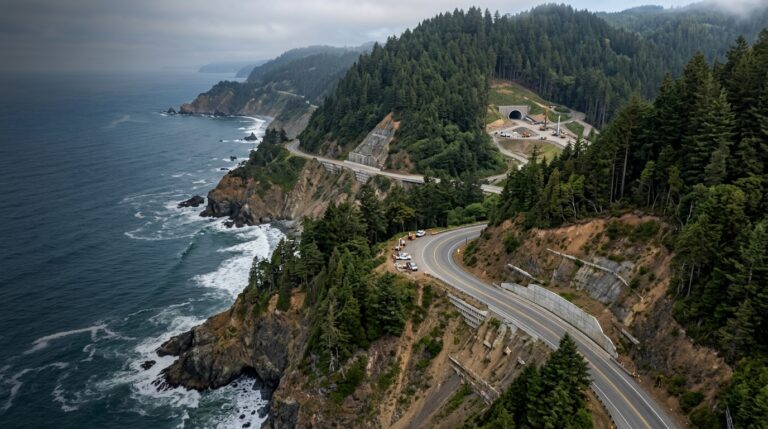
Drivers should also slow down when entering fog. Use headlights, increase following distance, and avoid stopping in the traffic lane to photograph scenery. Pull over only in a designated area where the vehicle is fully clear of the roadway. On Howland Hill Road, expect narrow sections, pedestrians, blind curves, and vehicles approaching near the center of the road.
Carry downloaded directions because mobile service can be unreliable outside Crescent City. Keep water, food, basic first-aid supplies, and a charged phone available even on a short outing. Review our Redwood parks summer guide for current trail, road, and access considerations.
Crescent City fog season is easier to enjoy when visitors stop judging the day by the amount of blue sky. Low clouds may change the coastal view, but they also create quiet forests, soft light, and the cool summer conditions that define Del Norte County. Pack layers, keep the itinerary flexible, respect the ocean, and treat fog as part of the landscape rather than an obstacle to the trip.